Murray River Retrievers
Australia’s own home grown Retriever
The Murray River Retriever
Also know as: The Murray River Curly Coated Retriever, Red Curlies, Murray Duck dogs, Murrays, MRRAs, MRCCRs.

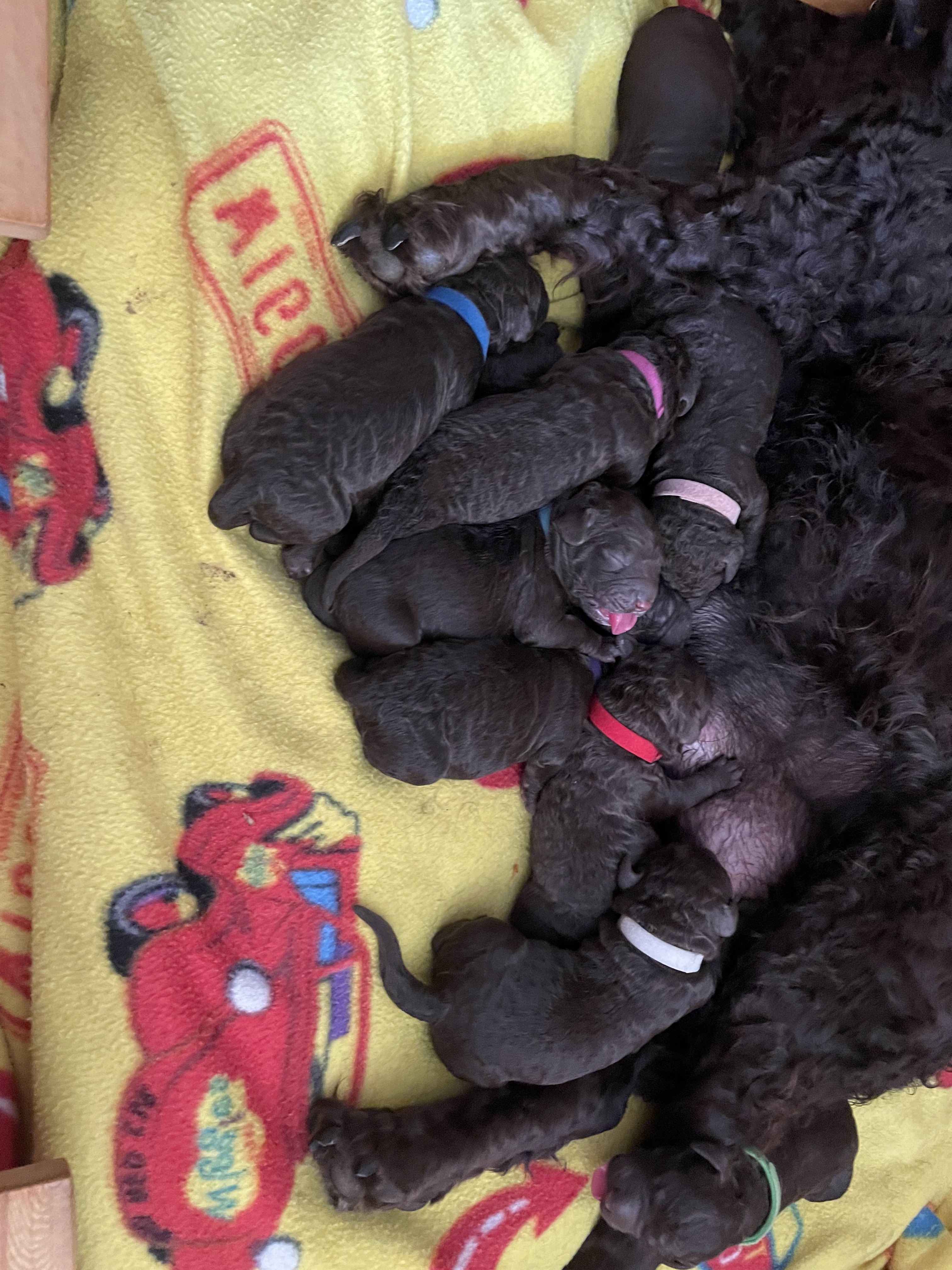
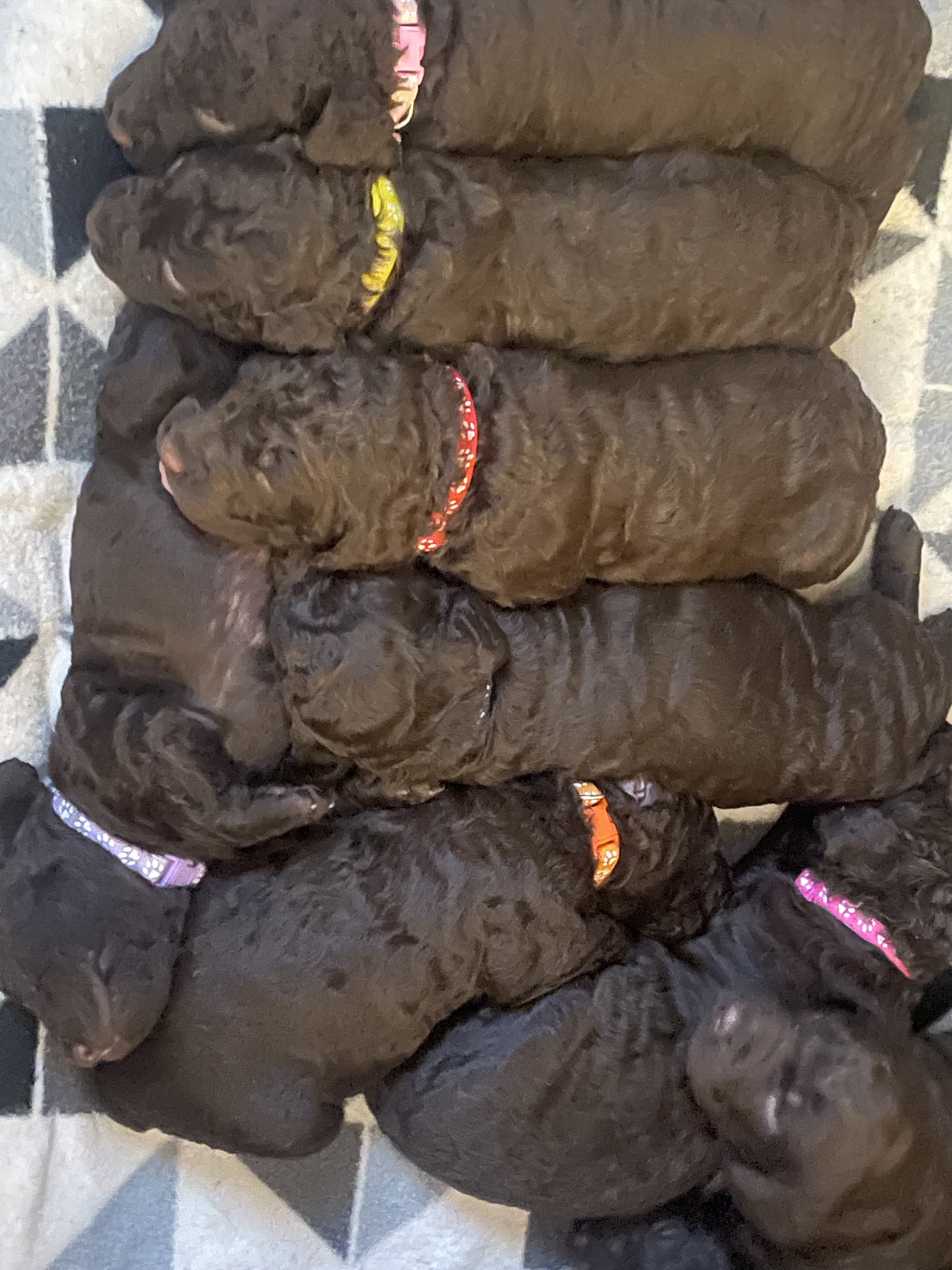
Applications for Murray River retriever puppies can be made Via our Rightpaw profile:
https://rightpaw.com.au/l/sa-murrays-murray-river-retrievers/14d42612-cf4b-4fbc-b38f-07bcd3602e6d
The Murray is both Australia’s oldest Australia-developed dog breed and it’s newest. With genetic and hisorical evidence dating the bMurrays to the 1800s they (along with the Kelpie) are Australia’s oldest Gun dog breed (Kelpie’s are herding dogs), the ANKC also recently (late October 2021) voted in and accepted the Murray River Retriever as a Purebred AND Pedigree breed in it’s own right.
Effective from January 1st 2022 the Murrays will be able to join and compete in ANKC competitions in both the Retrieving and the Gundog categories.
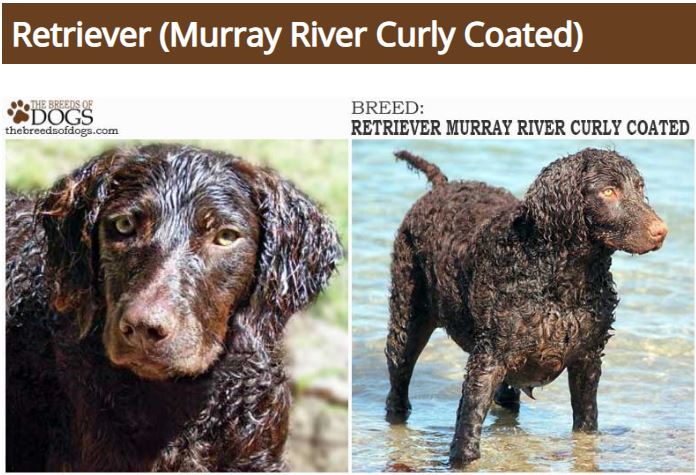
Australia’s only home-grown retriever this all-purpose gun dog was created to do it all: point, flush, scent, track and retrieve all under the trying and treacherous Australian conditions. Best known for being the favored paddle boat and duck dogs banks of the Great Murray River.
With the intelligence and focus needed to track game combined with the patience to wait silent and still for hours until their owner gives them the signal-the very traits that made these dogs the ultimate hunting companion makes them excellent companion and assistance dogs. There are currently several Murray’s working in a wide range of assistance dog fields in Victoria, we are hoping to encourage their usage in this area here in South Australia.
Pictures below taken from the September 2021 Monthly SA Murray meet by member Ranger Hunter.
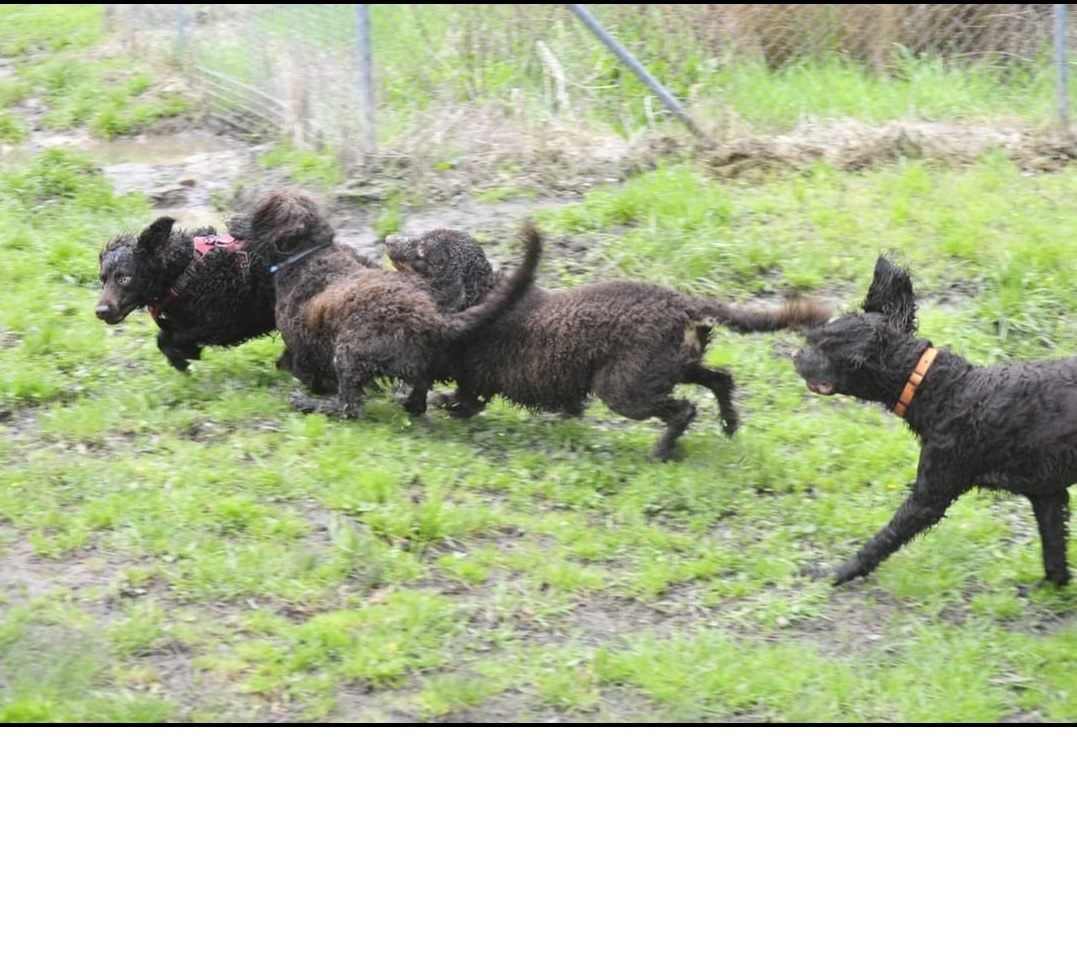
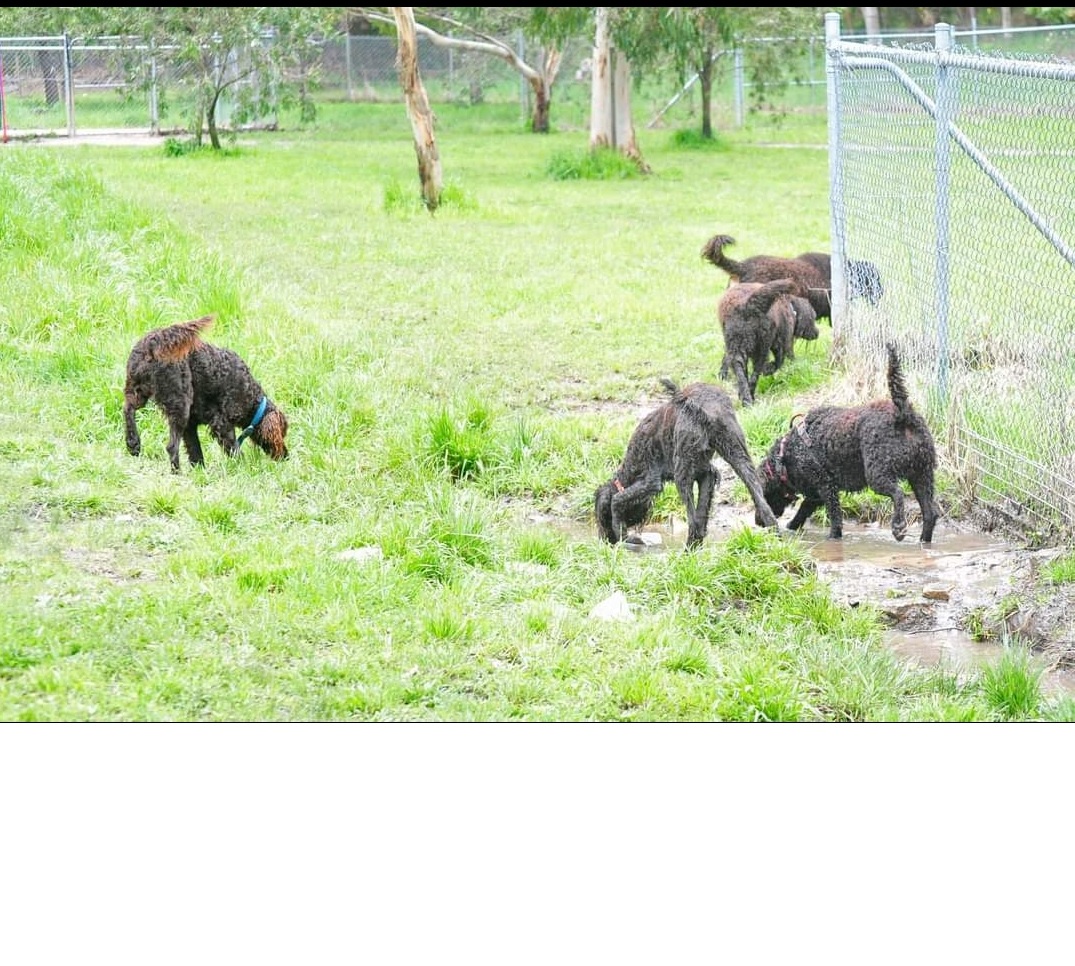
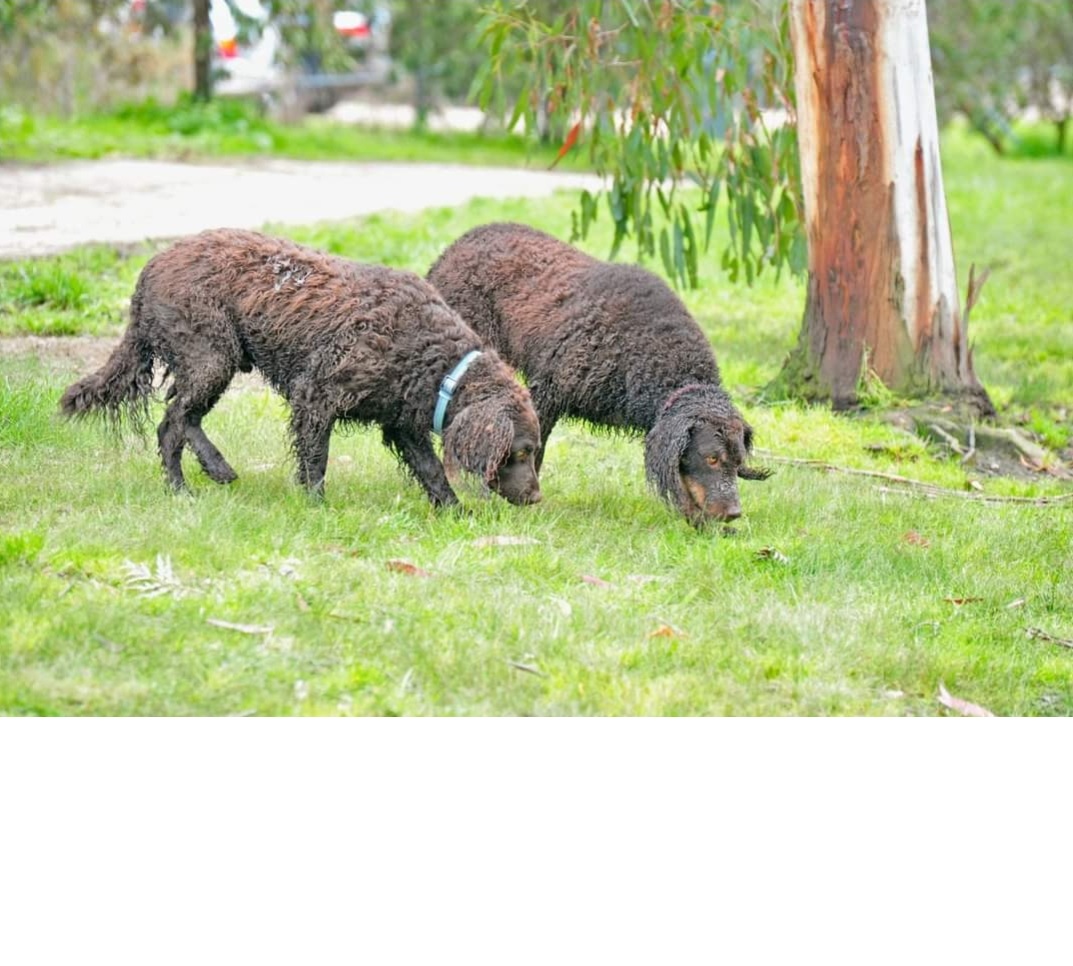

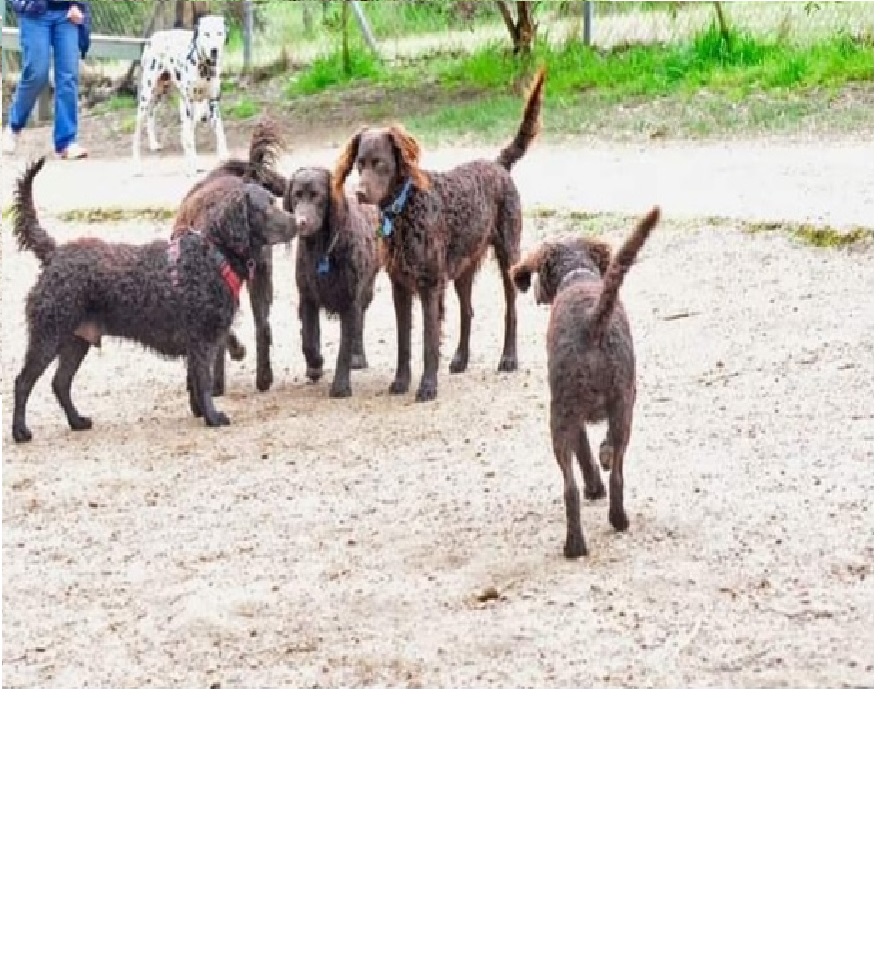
Murrays come in a variety of sizes and coat textures, from small/medium spaniel sized (due to their smaller spaniel ancestry) ranging from 18-28kg through to the larger statured type up to 47kg. DNA testing companies Embark (USA) and Orivet (Australia) have studied the Murray genetics and declared them to be far enough removed from their retriever and spaniel ancestry to be declared their own breed.
Some Murray’s coats are wavy or frizzled with lots of feathering on the tail and legs, these types have a thick double coat and tend to shed a lot. This is speculated to be due to their ancestry being Portuguese water spaniels, Irish water spaniels and golden retrievers
Our Murrays do not possess undercoats (no double coat) and so shed significantly less then most other breeds of retrievers (including the longer legged Murrays). Our Murrays coats vary from medium short to long, with low seasonal based shedding, their coats wave and curl tightly to their bodies providing warmth and protection from brambles. We specifically pick our breeders for this trait as it produces a very low maintenance coat that requires very little grooming whilst maintaining a neat “just clipped” appearance.


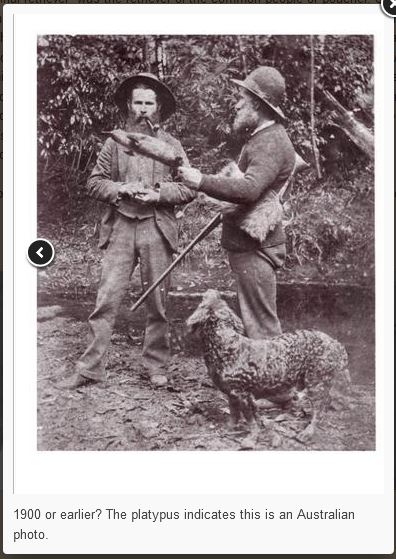

At Casa canines we breed the smaller sized Murray river curly coated retrievers(sometimes called Gippsland Murrays as many of the smaller ones came from this region), the smaller Murrays ancestry of which is believed to include several classic Chondrodystrophic breeds (shorter leg to body ratio) such as Cocker spaniels, Field spaniels and the Clumber spaniel. All Murrays posses a short leg to body ratio, it is part of the proposed breed standard, in the smaller Murrays this ratio is more pronounced.
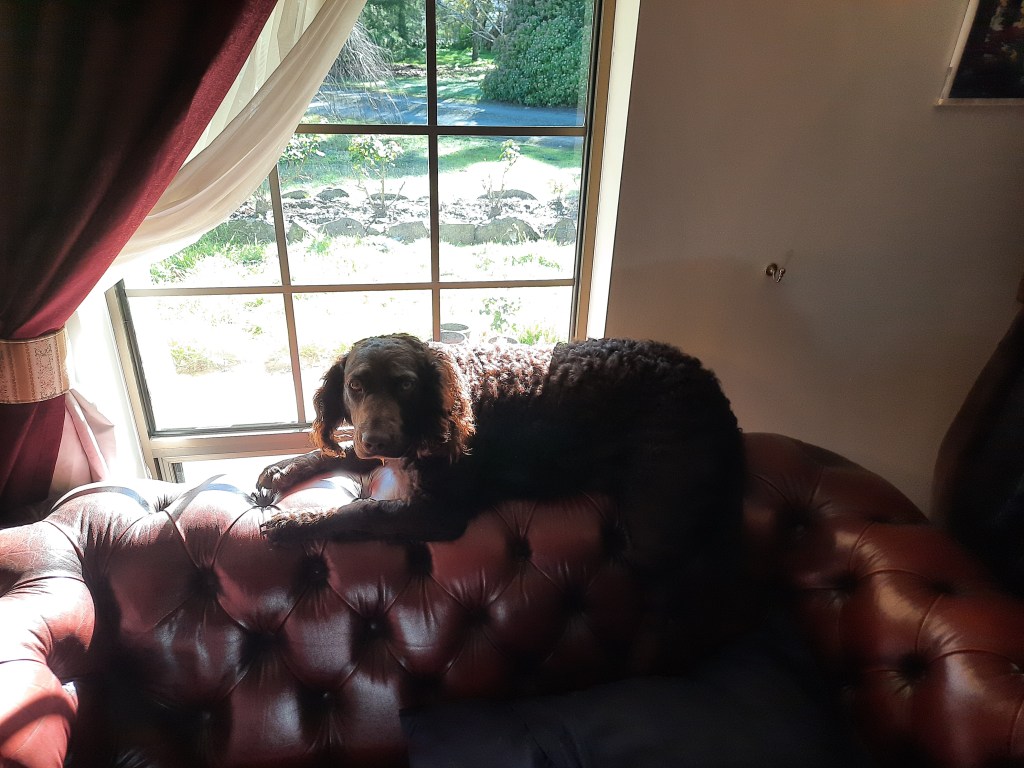
As with all Chondrodystrophic breeds (the most infamous being Corgi’s and Dachshunds) care must be taken during their early development to minimize strain on their backs and joints (keep them at a healthy weight) so they should not be encouraged to jump up or down(from couches,beds, cars) during play (no back-flips in the air )or engage in strenuous dog agility training (such as close pole weaving or jumps) until after they have finished growing (18-24 months old) .
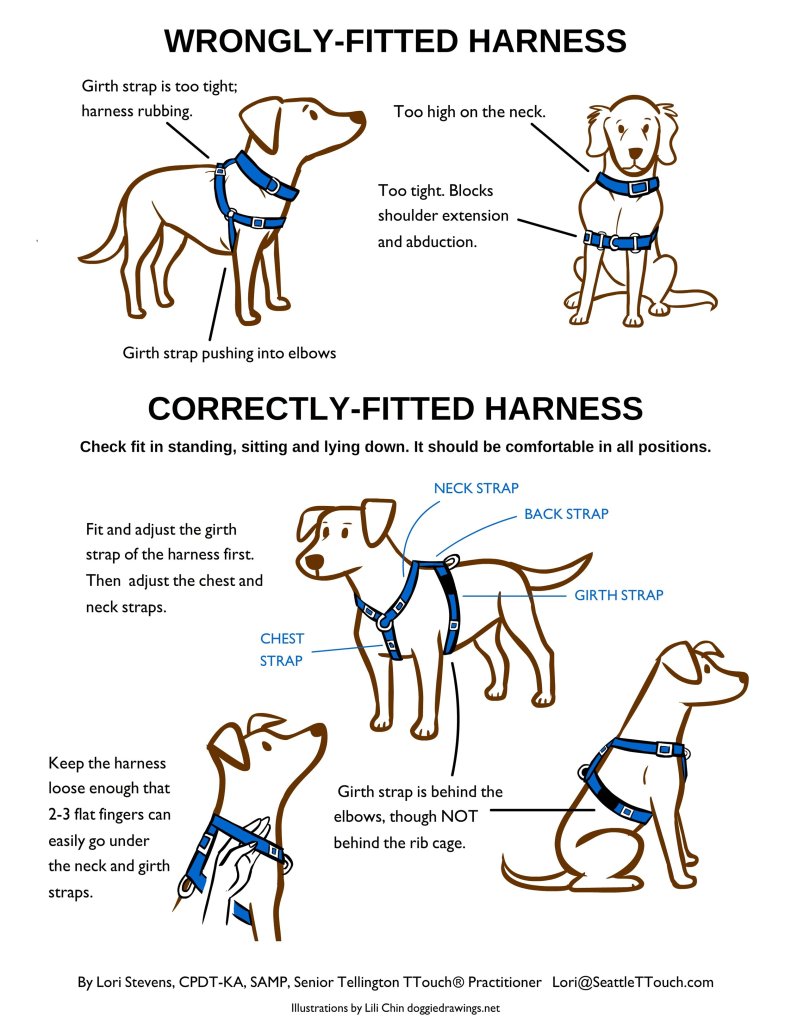
These are the current ANKC recommendations for maximizing a puppy’s long term health regardless of breed, cross body harnesses are also the preferred tool for leashed walking so as to evenly distribute pressure across the chest and shoulder (not centralized on the neck putting pressure on the top vertebrae). This is why we acclimatize our puppies to wearing such harnesses from a young age and provide an adjustable one to their new owners as part of their take home puppy packs.
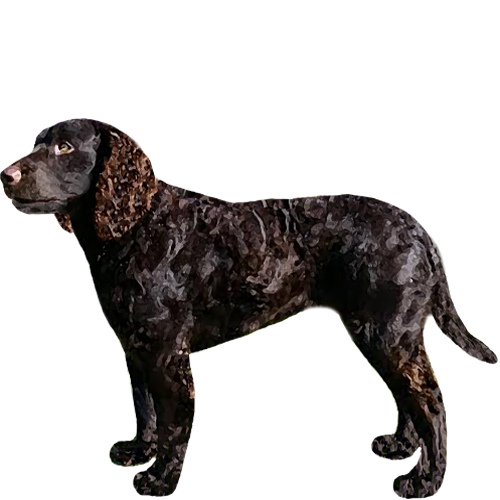
The small legged Murrays were (and still are in some areas) referred to as “Punt dogs” as they would jump off the punts of the river boats to retrieve birds shot on the river. The Longer legged Murrays were called “Reed dogs” as their longer legs better suited them to flushing or retrieving waterfowl that was hiding in the long reeds that grew along the Murray river.


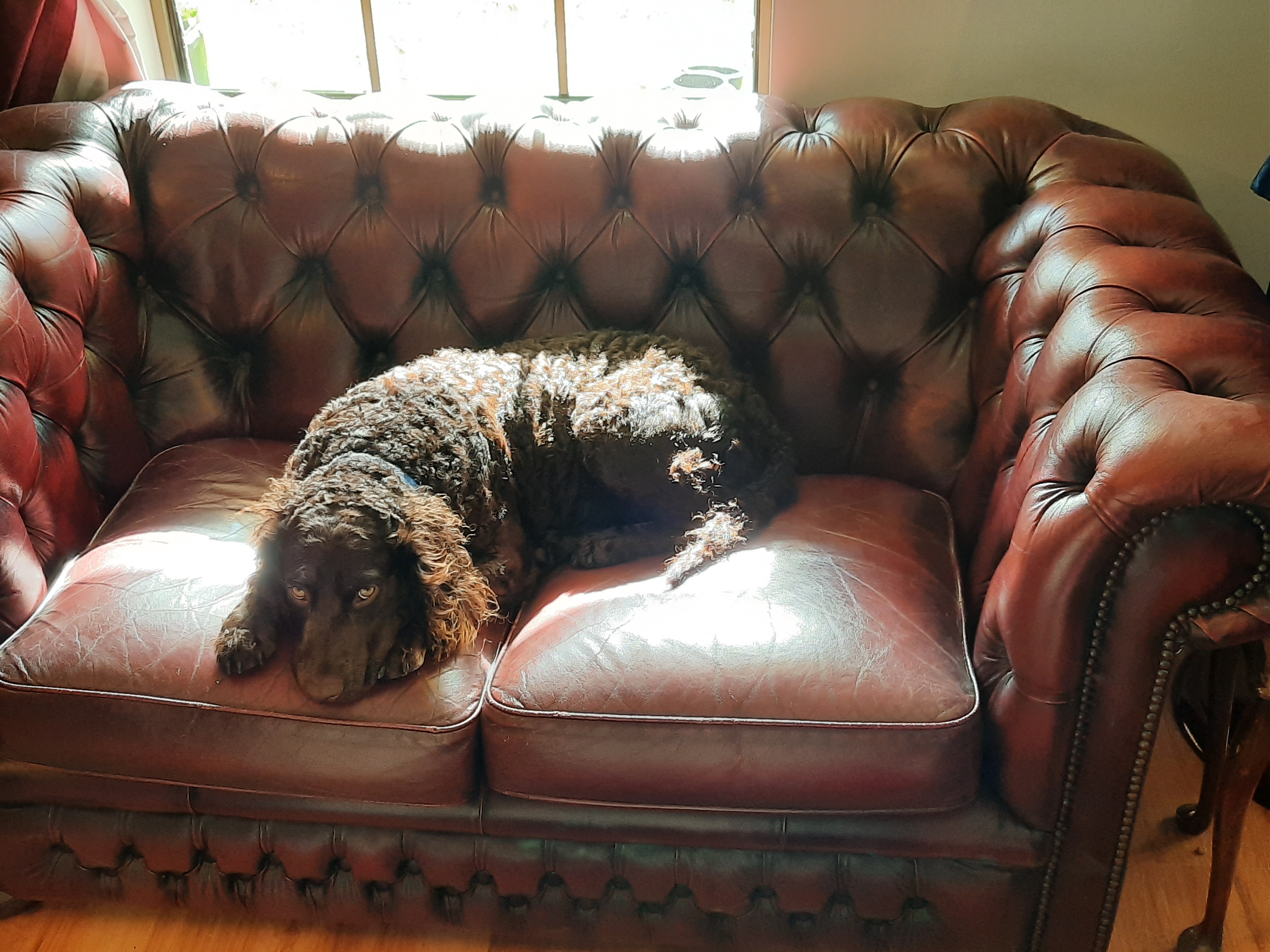
We are a registered breeder with the Murray river retriever association (MRRA) which is the only currently recognized breed association for the Murray River Curly Coated retriever as well as registered with the South Australians Dogs and Cats registry, The RPDBA and the AAPDB.
Murray River Retriever Official Breed Description and Standard.
MURRAY RIVER RETRIEVER
Group
Group 3 (Gundogs)
General Appearance
The Murray is stocky in build with a solid liver-colored curled coat.
His size and build create a rectangular outline. He has a strong moderately broad head with a distinctive stop. His ears hang loosely and frame the face. Distinctive webbed feet are a hallmark of the breed.
Characteristics
The breed has a natural ability to find, flush and retrieve game with a soft mouth and track large game. Expression shows alertness and intelligent focus.
Temperament
Friendly, self-confident, highly intelligent and inquisitive.
Head, Skull and Muzzle
The head should balance with the rest of the body. It is a blocky wedge shape with a moderately broad, flat or slightly concave parted skull and a distinctive stop when viewed from the front or side. Females have a more feminine head.
Fore face and skull: Of equal length. Planes of skull and muzzle parallel.
Muzzle: Medium length with strong jaws, not snipey enabling the dog to carry game. The upper plane is level. The flews cover the mouth and may extend to cover the lower jaw; lip taper ends mildly and rather blunt but not square.
Nose: Wide and fully pigmented with full nostrils, appearing blunt or slightly upturned.
Eyes
Moderately large almond shaped eyes, obliquely set. Not protruding. Amber to light brown in colour. May change in different light settings.
Ears
High set, teardrop-shaped with medium length leather, measuring to the bottom of the jaw. Covered with loose curls which frame the face. Curls may extend below the leather. Always quite mobile when the dog is attentive or in action.
Jaws
Strong with perfect, regular and complete scissor bite, i.e. upper teeth closely overlapping lower teeth and set square to the jaws.
Neck
Medium length, free from throatiness and flowing into well laid-back shoulders. Of sufficient length to enable the dog to pick up game on the move when retrieving. Strong and carried high when alert.
Forequarters
Shoulders: Well laid back and muscular, blades of near equal length to upper arm. Forelegs: Set well under body, medium in length and straight, showing strong, round bone and muscle. Pasterns flexible and of medium length.
Front dewclaws: present.
Body
The dog is longer in body, measured from point of shoulder to point of buttock, than in height from withers to ground. The coupling is short.
Ribs: Well sprung, extending into a deep, powerful loin with a slight tuck-up of flank.
Chest: Moderately-deep, round in cross section with the brisket level with the elbow.
Topline: Strong and level
Hindquarters:
The deep, muscular loins and strong hindquarters should balance the overall structure of the dog. The thighs are powerful with muscling down to the moderately long and well-developed second thighs. Well-turned stifles and strong hocks are also essential for the dog’s extension and drive when moving either on land or in water. Dogs should never be cow-hocked, sickle-hocked or bow-hocked.
Feet:Round, with tight with well arched toes, thick tough pads which are not small compared to leg bone.
Webbing and feathering present between toes for swimming.
Nails: Black or dark brown
Tail:Strong and thick at the root tapering gradually to the tip. Reaching past the bend of hock; carried straight or sabre like on the move.
Natural feathering which if trimmed reveals short curls.
Gait and Movement:
Quick movement with good extension and drive. Well-balanced on the trot. Front reach is free flowing, and in balance with the rear action. Should not be stilted or hackneyed. Pasterns should be strong but flexible on the move.
Coat
Body coat: Medium to tight curls lying close to the skin, extending from occiput to tip of tail and behind the legs. Slight feathering on back of forelegs.
The forehead and face is smooth with the curls commencing at the back of the skull, where the ears begin. The front of forelegs, hocks, pasterns and feet has a short, smooth and straight coat.
Texture: The coat is naturally oily but not harsh to the touch. It is sufficiently thick to protect the skin from cold water and punishing cover while retrieving.
Color
The Coat is Solid liver. Not Shiny. It should be dull to reduce reflection when waiting to retrieve game along the river bank.
Some dogs show a few white hairs or a white spot on the chest. Liver dogs’ color shades may vary.
Size
Ideal height at withers: 46-53cm (or 18 – 21 inches). There are no size parameters set for dogs or bitches
Faults
Any physical abnormalities that will affect the MRR performing his original function should be considered a fault, such as structural abnormalities, eye disease or a thin, poor coat.
Muzzle: The lips should not be snipey, nor have excessive flews that extend below the jawline.
Eyes: Prominent (bugged) eyes, loose haws, entropion.
Ears: Ear leather is longer than the lower jaw
Color: Any color other than liver. No other marks except as stated in color.
Note: Entire male animals should have two apparently normal testicles fully descended into the scrotum.
For more information on the fascinating history of the Murray river curly coated retriever (I am by no means an expert just a fan of this wonderful breed) you can read more on the following sites:
- https://wagwalking.com/breed/murray-river-curly-coated-retriever
- https://www.easypetmd.com/doginfo/murray-river-curly-coated-retriever
- https://www.mrr.org.au/
- https://thebreedsofdogs.com/retriever-murray-river-curly-coated/
Subscribe to our email list to be contacted when a litter of pups becomes available
 Casa Canines